Good morning and thank you for being here. Thank you, everyone.
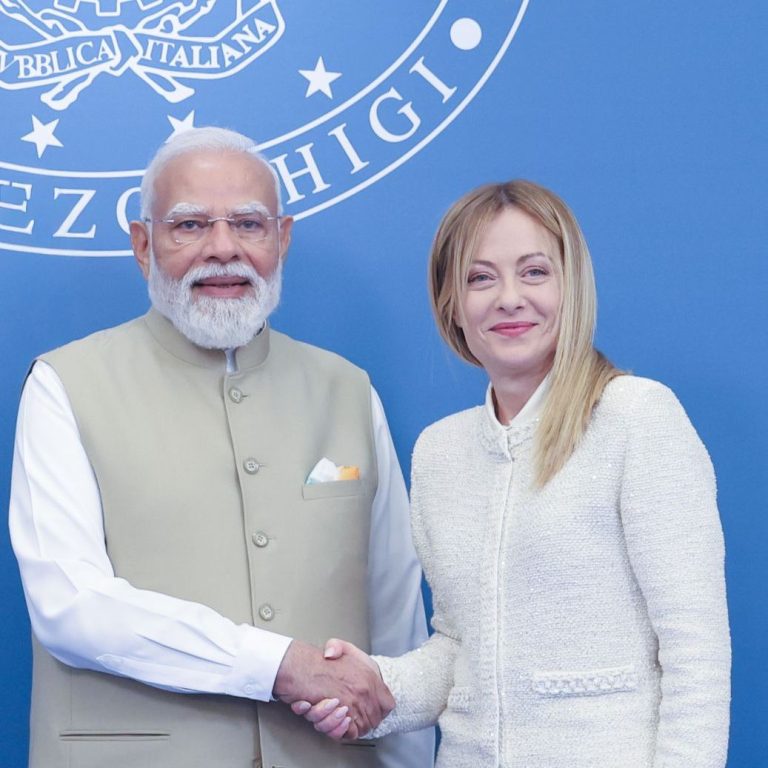
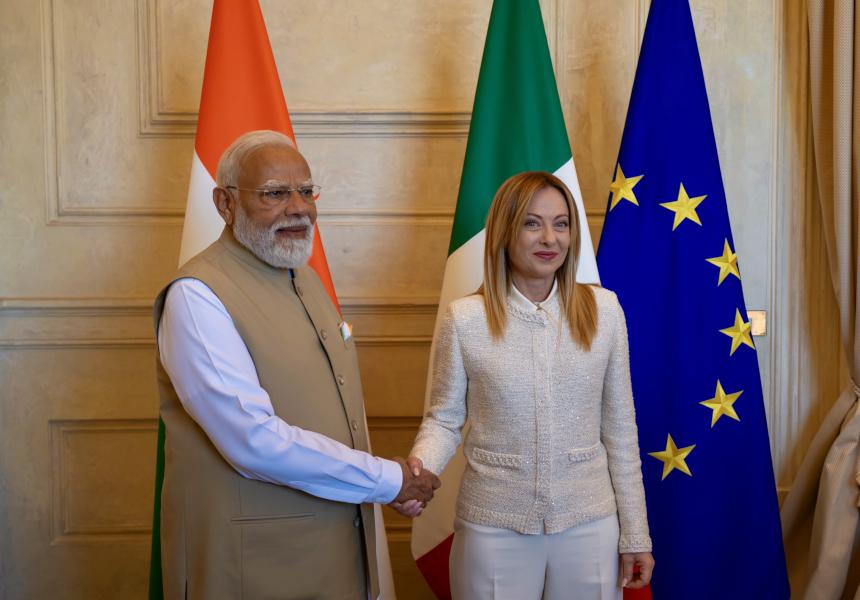
It is an honour as well as a pleasure for me to have welcomed Prime Minister Narendra Modi and his delegation to Rome, on what I believe would be an understatement not to define as a historic day for the relations between our two nations.
My friend Narendra Modi has been leading India continuously now since 2014, but today is his first bilateral mission to Italy. The last time an Indian Prima Minister visited Italy on a bilateral mission was back in 2000, so 26 years ago. With today’s visit, we are not only addressing that gap but have also decided together to step things up.
This visit marks the culmination of the process we have been building over these past years with consistency and determination to reinvigorate our relationship, taking it to its highest ever level. This process has moved forward very quickly: in 2023, I was in New Delhi, where we launched our strategic partnership; the following year, in 2024, we met with the Prime Minister in the margins of the G20 in Brazil and signed our strategic joint action plan for 2025-2029; today, here in Rome, we are elevating our relationship to the level of special strategic partnership – the highest level ever reached in the relationship between our two nations.
We can therefore safely say that Italy and India are now closer than ever and that our relations are now in a position to be able to express their potential to the full. This is clearly thanks to our teams, our ministers, and our diplomats, who have worked hard over these years. It is also thanks to our production systems, which are showing growing interest in each other, as can be seen by the fact that we held three Italy-India business forums last year. Furthermore, it is thanks to the more than seven meetings that Prime Minister Modi and I have had over the last three and a half years, clearly giving rise to a deep understanding of our respective points of view as well as, if I may, also a sincere friendship based on respect and mutual trust.
I have personally learned to appreciate the Prime Minister’s vision, pragmatism, and leadership, as well as, obviously, the support he continues to maintain among his citizens after several years as head of government. I believe this friendship and relationship of ours have very much helped us to work so swiftly on our bilateral relations. So, as I was saying, today is a historic day as the relationship between Italy and India is taking another step forward in terms of quality.
What goals are we setting ourselves? We are certainly setting ourselves the goal of increasing our already solid trade, to reach EUR 20 billion over the next three years (so, by 2029), up from the current EUR 14 billion.
This is a very ambitious goal but can be achieved, clearly also by harnessing the potential of the EU-India Free Trade Agreement. This goal is also achievable considering that our economic and production ecosystems are highly complementary. India’s digital dimension and infrastructure, and innovative dynamism, go very well together with Italy’s industrial strength, manufacturing excellence, and technological integration capacity. This integration clearly creates business opportunities, investments, quality jobs, and industrial collaboration and, in this regard, we are determined to fully explore all these opportunities.
In this context, there is also the commitment to pursue the INNOVIT India initiative together, which provides for the establishment of an Italian centre in New Delhi to foster cooperation between our talents, innovation ecosystems, start-ups, businesses, universities, and research institutions.
With regard to innovation, I would like to highlight the joint work Italy and India have been doing for a long time now to ensure that the development of artificial intelligence – the most disruptive revolution of our time – is responsible and remains human-centred. We are convinced that innovation, regulation, and security must go hand in hand in order to enable artificial intelligence to unleash its potential in a positive way, meeting citizens’ needs and remaining at the service of humanity. In this regard, we have pursued a lot of political initiatives, such as the Italian G7 Presidency and the AI Summit in India, which have worked, and continue to work, toward the same goal, on the same wavelength.
Our goal is of course to leverage the complementary nature of our systems in many other sectors, which we discussed a lot today and yesterday evening – from advanced manufacturing to infrastructure, from energy to the space economy. Defence is also an area we are working on a lot, and well. Then there are critical minerals, the agri-food industry, maritime transport, tourism and culture, which, for two major, millennia-old civilisations, obviously represent a very important opportunity to grow together.
The important agreements we are signing today go precisely in this direction, aiming to strengthen our cooperation across a very broad range of areas. We want to enrich this work further today with a meeting we will have following these press statements with a number of Italy’s and India’s main business representatives, to also discuss with them how to best encourage synergies between our industrial champions and production systems, and, as far as Italy is concerned, to mutually attract more direct investments.
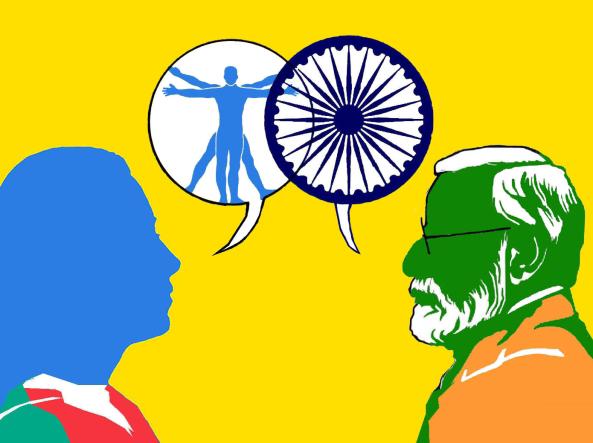
As we know, the strength of the relationship between our nations is not just about the depth of our political relations or economic data, but is also and above all, as I was saying, about our ability to bring our peoples increasingly closer together and create opportunities to get to know each other. This is why we have decided to launch the Year of Italy-India Culture and Tourism in 2027: a unique opportunity to foster dialogue between our ancient cultures and make them increasingly connected.
We have another characteristic in common: geographically, we are both peninsulas, acting as logistical platforms projected into areas that are crucial for the world – the Mediterranean and the Indo-Pacific. We believe that strengthening interconnections between these two major areas is key, which is why we are also determined to implement the IMEC — the infrastructure and economic corridor between Europe, the Middle East, and India. As you know, this initiative was created within the G20 framework and we both strongly believe in it, as we believe it can unleash extraordinary potential for our trade, our businesses, and our relations.
Italy and India of course share a common vision on many of the major challenges of our time: international stability; the defence of rules; economic security; the resilience of value chains; the promotion of peace; inclusive development. We also discussed many of the complex scenarios we are facing in this era: Ukraine, and our commitment to reach a just and lasting peace; the Iran crisis, and our shared hope that the peace negotiations can move forward and come to a positive conclusion, in what we know is a very precarious context; freedom of navigation, the reinstatement of which we are both working on – our two nations hardly need reminding of why freedom of navigation is very important for them; the Indo-Pacific, where we of course share India’s vision of a free, open, and inclusive Indo-Pacific. In these increasingly interconnected scenarios, Italy and India will continue to do their part at all levels, often together, to contribute to peace and restore stability.
So, dear Prime Minister, thank you again for being here. This visit is an honour for us and opens a new chapter in our relations, and it will not be the last in this long book we are writing together with determination, doing our job as best we can.
There is an Indian word that sums this up well: ‘Parishram’, which means hard work, constant commitment, effort. I’m told this word is used a lot in India, as is the equally popular proverb — let me try here — ‘Parishram safalta ki kunji hai’, meaning that hard work is the key to success. This is how we are used to building our relations – with hard work, which in the end leads to success.
Thank you again, Mr Prime Minister. Over to you.